The non-surgical cosmetic guidelines put in place by AHPRA for 2026 are clear on one thing: a cosmetic procedure is to be regarded as healthcare, not some beauty-service extra you can put on the side. So in the real world there has to be a proper assessment of the patient, lawful prescribing, safe injection and emergency protocols, as well as full clinical records and honest advertising.
Here we set out what is required of non-surgical work in Australia, from dermal fillers and botulinum toxin to other injectables. Scarlett Fairchild has put this guide together in no-nonsense Australian English; there is no need to make regulation any more arid than it already is. For a broader overview, see Australia’s cosmetic procedure rules. Do bear in mind that requirements are subject to change so any practitioner would be well advised to consult the latest from the Therapeutic Goods Administration (TGA), the relevant National Board, state or territory authorities and the Australian Health Practitioner Regulation Agency (AHPRA) before proceeding.
Plain English on the 2026 Rules
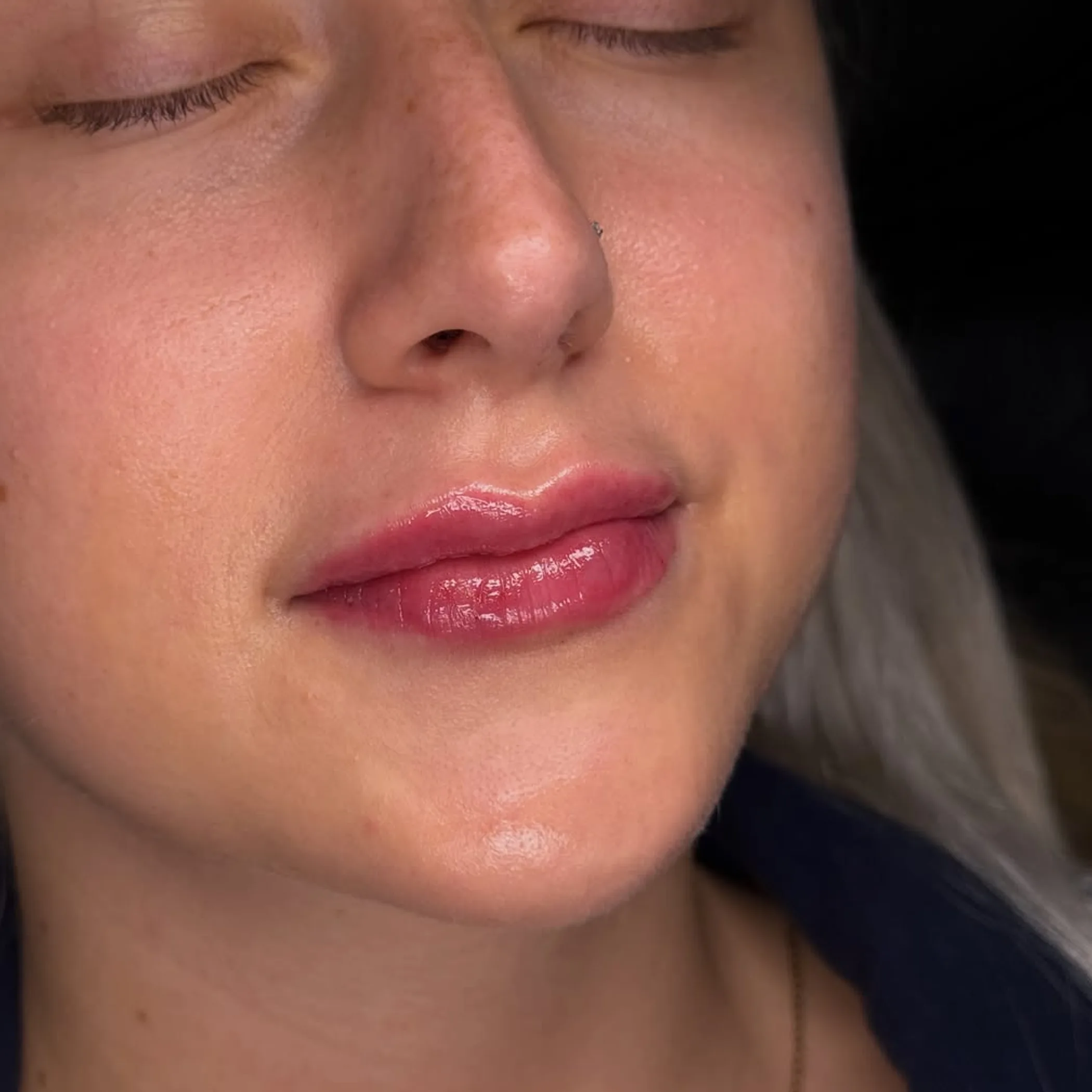
It is straightforward: if the human body is being treated, injected, prescribed for or diagnosed then it is a health service. One does not get off the hook of professional obligations by putting out a social media post to the effect that it is a “beauty treatment” done in a salon.
Registered medical practitioners undertaking cosmetic surgery or its non-surgical equivalent will have the Medical Board of Australia’s expectations to live up to. The same goes for other registered practitioners who must abide by their own standards of practice, registration and medicines rules.
While the National Law gives the rules a national reach, they are hardly a single document one can file away in a drawer. State and territory laws can impose their own conditions on matters of poisons, privacy, workplace safety, premises and the like. Put together they form the compliance picture for cosmetic procedures in Australia.
What kind of procedures?
By and large any treatment that alters appearance without going under the knife is a non-surgical cosmetic procedure. The risk may differ but a sensible clinical approach is called for whenever a registered health practitioner or prescription medicine is involved, or there is the prospect of a medical complication.
One might think of botulinum toxin or platelet-based treatments, some skin-penetrating work, and devices that could be answerable to separate state or therapeutic goods rules.
| Procedure Type | Typical Compliance Issues | A Patient Might Ask |
|---|---|---|
| Botulinum toxin | Consent, competent injection, adverse-event planning, lawful supply and patient assessment | Who is to manage a complication and who has assessed me and put in the prescription? |
| Dermal fillers | Records, emergency management, consent, vascular-risk and anatomy | In the event of an infection or suspected vascular issue, what then? |
| Skin-penetrating | Scope of practice, device safety, infection control and local public-health rules | How do you ensure the equipment is used and maintained in a safe manner? |
| Prescription cosmetic medicines | Follow-up, labelling, storage, authority to prescribe and clinical indication | What aftercare is there and what are the alternatives and risks? |
There is talk of Botox and dermal filler regulations in Australia as if they were two distinct sets of rules for the beauty industry. They are not. Dermal fillers present clinical risks for all that they are for appearances’ sake, and botulinum toxin is a prescription medicine. The law will look at the jurisdiction, the setting and the product.
Cosmetic Injections: Who is qualified?
Only a registered health practitioner with the right authorisation and scope of practice should be putting injectables in a patient. This could be a registered nurse or medical practitioner provided the education and supervision are in order.
Registration alone does not make someone adept at injecting every part of the body with every product. There is an onus to know the anatomy, the contraindications, how to prevent infection and deal with an emergency. A certificate from some private course is no replacement for demonstrated competence or lawful registration.
Nor do the regulations in Australia offer a way around for a beauty therapist. An unregistered person cannot be made into an authorised injector by a business putting a nurse’s name to the forms.
Booking an appointment
AHPRA’s public register is a good first port of call to see if a practitioner is in good standing. It is only part of the story though. Find out under which profession the individual is registered, who is doing the actual work and who is making the prescription and conducting the assessment.
One does not have to spend long in the skin clinics of Sydney to notice that the questions which put people on the spot are seldom about the dimensions of the waiting room or what colour one has painted the walls. They concern who is to answer for things when they go awry. A clinic with nothing more than a well-oiled brand to show for it will be hard put to give a straight answer on that.
Assessment, Consent And Safety
There can be no safe treatment without proper patient assessment. The practitioner has to take into account medical history and any allergies, as well as medicines, pregnancy or breastfeeding if that is the case, prior procedures, the state of the skin, what the patient wants to achieve and anything that might add to the risk.
Then there is informed consent. In Australia a cosmetic procedure demands a substantive dialogue over and above the form signed at reception. One should be made aware of the benefits to be had from the procedure and its material risks, of alternatives, the fees, the recovery and the eventuality of an unsatisfactory result or complication.
The patient must be able to put questions to you and say no without feeling any pressure. It is not a permission slip good for any injectable; consent is particular to the procedure and has to be readdressed if the plan of treatment is altered.
What constitutes good consent
With cosmetic injectables the conversation needs to address the product and where it is to be applied, the effect one can expect and its limitations, side effects and the odd serious complication. When it comes to dermal fillers that means lumps, asymmetry, infection or vascular issues, not to mention the clinic’s emergency protocols.
“Non-surgical” is a category of procedure, not an assurance of being free from risk. An ill-judged technique or poor follow-up can make a small needle a big problem.
On the matter of prescribing, delegation and supervision
These are distinct things. To prescribe is to make a lawful clinical decision after due assessment and the practitioner is responsible for that. You do not shed your professional accountability by delegating a task, nor is supervision something to be taken lightly given the patient and setting.
Medicines legislation and one’s scope of practice must be observed. A prescription is not a blank order for someone else to determine the dose or site of treatment absent of clinical input.
Telehealth has its place in a consultation but it will not render every cosmetic prescription in order. The practitioner has to be in a position to properly assess the patient and spot contraindications, to communicate and put in place safe follow-up. Should an in-person assessment be called for, a video call is no substitute.
The need for emergency planning
Any clinic doing injections ought to have the equipment and personnel in place, as well as documented processes for adverse events that can be foreseen. Staff should be clear on when to halt a treatment or summon emergency services.
It is not a question of having staff scurry to the internet to figure out what to do while a patient is unwell. Before treatment is underway the clinic should have its responsibilities in hand, from incident documentation to the availability of the right medicines.
Advertising and social media
Be it on a website, via an influencer or on the clinic’s signage, the rules for advertising cosmetic procedures in Australia hold. There is no difference in the duty to present health services in an accurate and responsible way and not set up false expectations.
Practitioners and their businesses would do well to steer clear of any claims that could be seen as misleading or trivialise the risk, let alone use pressure. “Guaranteed results”, “no downtime” or “permanent” are statements that may mislead when individual factors come into play.
Before and after photos require a certain discretion. With the aid of filters and the right lighting an average outcome can be made to look like something out of a digital fairy tale, but images should not hide conditions or imply an improvement the procedure cannot be relied upon to give.
Nor should advertising be used to prey on the vulnerable with a sense of urgency or shame, or to offer treatment as a panacea for wider personal issues. Health service marketing is not the venue for “last chance” type posturing. The AHPRA advertising hub and its guidance are worth a review in the preparation of such material.
Records, follow-up and complications
A practitioner’s records should tell the story of what was done and why the decisions were made. They will typically contain the details of the assessment and medical history, the consent that was given, the product and lot number, the identity of the practitioner, the dose and technique employed, the areas treated and any aftercare instructions.
Proper records are a safeguard for both the patient and the practitioner. Should a patient present at an emergency department, switch clinics or have a delayed reaction to treatment, they will put another clinician in a position to comprehend what has been done. They are also of use in regulatory review, quality improvement and when it comes to handling complaints.
The level of follow-up care must be commensurate with the procedure and the risk profile of the patient. Written instructions should be unambiguous as to what effects are to be expected, any warning signs, how to make contact and under what circumstances urgent medical attention is called for. A clinic that cannot be reached once the money has changed hands is hardly patient-centred.
What Catches People Out
There is a tendency to think a complication is only an issue if the patient makes a fuss about it. That is a mistake. Adverse events require to be managed, documented and escalated in the proper way, regardless of whether the patient is incensed.
Then there is the error of regarding a correction appointment as licence to forgo a fresh assessment. It is a clinical interaction none the less. The practitioner ought to reassess the patient, go over the original file and determine if more treatment is safe and what the alternatives are.
Privacy is something not to be overlooked. Cosmetic patients can be sensitive to their treatment history, identifying details and photographs. Before images are put to use for marketing or educational purposes, permission must be had from the patient and all records kept in accordance with privacy obligations.
State And Territory Requirements
While national professional regulation is the province of the National Boards and AHPRA, the local operation of cosmetic services is subject to state and territory law. This might pertain to business licensing, waste disposal, public health, infection control, premises, poisons and medicines, occupational safety and emergency access.
So a given treatment could carry a national registration onus as well as local demands. One would be unwise to assume that a set up in Sydney will translate without question to Perth, Darwin or Brisbane; local rules can be as disparate as a suburban footpath and a wet-season road.
Practitioners are well advised to have a compliance review done for the location before they open, move or put out a new service. Patients for their part should enquire as to where the procedure is to take place, the suitability of the premises and which authority to approach with a complaint.
Compliance Checklist For Clinics
A sensible review covers the entire course of the patient’s experience, from the advertisement to the last follow-up. Below is a checklist of some of the trouble spots.
- Verify the registration, insurance, scope of practice and competence of each practitioner.
- Have on file the informed consent, treatment rationale, medical history and patient assessment.
- Medicines must be prescribed, supplied, stored and administered by lawful process.
- Put in place the right kind of delegation and supervision.
- Ensure that procedures for adverse events, escalation and emergency equipment are in order.
- Look for anything in your advertising, testimonials or before and after pictures that could be construed as misleading.
- Clinical records, product details and privacy controls need to be accurate and up to date.
- And do not change the service without first looking at the federal and state/territory requirements.
Complaints Penalties And Review
If there is non-compliance the consequences will vary according to the jurisdiction, the regulator, the practitioner and his or her conduct. The regulator may see fit to give advice or education, impose conditions, reprimand, fine, prosecute or even cancel registration. An advertising infraction can have repercussions for the business and its reputation as well as consumer-law ones.
A complaint is not in itself evidence of misconduct but it warrants a serious response. Do not alter documents, be respectful in your reply and get professional counsel. Where there is a health risk, a concerned patient should put getting medical care before any complaints process.
One cannot put a price list or success rate on every cosmetic clinic and expect it to hold water. Outcomes and risks are a matter of the practitioner, the product, the area being treated and the follow-up. Regulation is no crystal ball, so be wary of hard and fast guarantees.
Frequently Asked Questions
What Are The New AHPRA Rules For Cosmetic Injectables?
In short: competent performance, suitable supervision, planning for emergencies, compliant advertising, lawful prescribing, informed consent and accurate records. What is required of you will hinge on the profession, the procedure, the product and the law of the state or territory.
Do You Need To Be A Nurse Or Doctor To Inject Botox?
An appropriately qualified and authorised registered health practitioner within his or her scope of competence should be doing the injecting. A job title does not suffice. As botulinum toxin is a prescription medicine the clinic has to comply with the relevant supply and administration rules.
Can Beauty Therapists Legally Perform Cosmetic Injections?
Not if they are not a registered health practitioner and wish to independently prescribe or administer a prescription injectable. A clinic should not put in place some nominal supervision or business arrangement to get around registration.
Is Informed Consent Required For Botox And Dermal Fillers?
It is. The patient is to be made aware of the proposed treatment in plain terms, including benefits, material risks, limitations, aftercare and what complications might arise. Having a form signed is no substitute for a discussion.
Can Cosmetic Injectables Be Prescribed Via Telehealth?
In certain clinical situations perhaps, but it does not of itself render a cosmetic prescription safe or lawful. The practitioner has to be able to make an adequate assessment of the patient and the risks involved and put follow-up in place. Sometimes a face-to-face is needed.
Final Takeaway For Patients
Consider a non-surgical cosmetic procedure to be healthcare with an aesthetic aim. Make sure you know who is prescribing and injecting, have a consultation, read the consent and check the emergency arrangements. Keep your expectations in check.
As for clinics, compliance is the system of the day, not a folder to be put behind reception. There is a rule of thumb from Scarlett Fairchild: if a clinic is unable to tell you what can go wrong, who is responsible and what the next step is, then do not book.