There is no single national figure that dictates the wind or rain limits for rope access in Australia. Any work of this nature has to be put in place with proper weather controls, the right equipment, competent oversight and a safe work method statement backed by a risk assessment. When surface conditions, poor visibility, lightning, wind or rain render it so, the work is to be put on hold, regardless of what the forecast may suggest.
One will not find an Australian rule that mandates a stand down at a given rate of rainfall or wind speed. The limit is a matter of the task at hand, the worksite, exposure, rescue plan and what the manufacturer stipulates. In this piece Scarlett Fairchild offers some guidance on making those calls rather than putting one’s trust in a weather app. See weather limits for rope access for more detail.
The Legal Safety Baseline
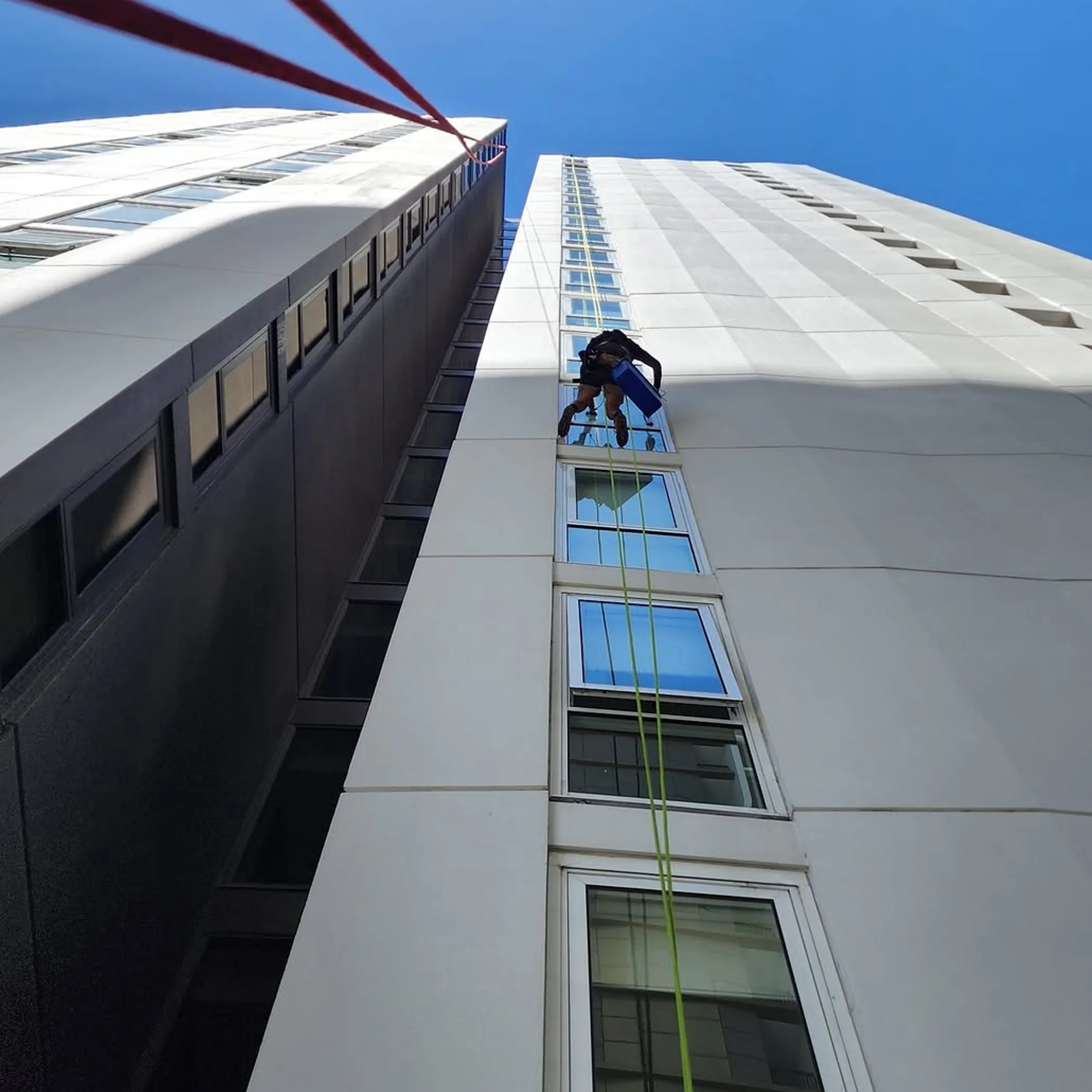
Under Australian work health and safety law, the person running the business or undertaking is duty bound to spot hazards and control any risks that can be reasonably practicable to eliminate. Competent staff, good supervision, emergency plans and equipment inspection are all part of the equation for rope access.
While the precise legalities can differ from one jurisdiction to another, the model principles of work health and safety in Australia serve as a sound reference. For the state or territory where the work is being done, consult the applicable law and Safe Work Australia’s position on falls from height.
What You Will Not Find: A Single Number
A suspended worker on a communications tower, open bridge or coastal cliff will be affected by the wind in a way a ground level reading cannot tell you. Several storeys up there can be turbulence and gusts that do not show at street level.
Rain brings its own set of problems. It can make a surface slick, impair vision, get into electrical gear, soak through clothing and present a hazard to a rescue. Then there is the impact heavy rain has on the condition of gutters, roof edges, anchors and temporary platforms.
Make Your Own Site-Specific Limit
Before work commences the documentation for the job should have a weather limit in writing, covering the parameters for when to proceed, when extra controls are called for and when to suspend operations. Do not take a generic internet checklist and make of it a law. Rely on the risk assessment, the principal contractor, site rules and the supervisor’s judgement to determine the most stringent requirement.
Observing the Workface
Planning with a forecast is fine but you cannot use it in lieu of what is happening at the work position. What the wind does beside a building entrance is of little consequence to someone on the exposed corner above.
High-rise and industrial sites, ridgelines and the like can see conditions turn in a moment. Have a competent individual on hand with the authority to call a halt if need be, and keep a record of the weather throughout the shift.
Take note of gusts as well as sustained wind. They can put stress on an anchor, displace tools or swing a worker into the structure. Crosswinds or those channelled between buildings can be more of an issue than a steady wind.
Some Practical Stop-Work Triggers
“Use your judgement” is not a control plan, it is an invitation to have words over a tarp in sideways rain. While the figures for wind and rain are in the job’s documented controls, clear triggers are needed. The table below is a framework for supervisors to decide on a review or a stop, not a legal limit.
| Condition | Practical Response | What It Can Affect |
|---|---|---|
| Light, steady rain | Review the task and ensure controls are still effective before going on; protect your equipment and check more often. | Grip, tools, clothing, friction and visibility |
| Heavy or wind-driven rain | Reassess and put work on hold. | Anchors, rope handling, communication, rescue access and vision |
| Strong or gusting wind | If the limit is reached or you lose control, stop. Otherwise apply the wind limit as documented. | Suspended loads, ropes, pendulum movement and the stability of the worker |
| Thunderstorms or lightning in the vicinity | Move to a safe spot and end any exposed work. | Metal components, structures, anchors, rescue teams and workers |
| Hail, dust or smoke | Wait for safe conditions. | Equipment inspection, breathing, visibility and communication |
| Conditions deteriorating fast | Withdraw after the current movement is made safely, if you can. | Your ability to carry out the task or a rescue |
Do not put it off until the weather makes a spectacle of itself. There are plenty of telltale warning signs: a worker is unsteady, there is repeated movement in the rope or loss of control in the hands, communication with the team is laboured. In many cases the prudent course of action is taken well before the weather can be deemed “bad” by an observer on the ground.
Wind Risk At Height
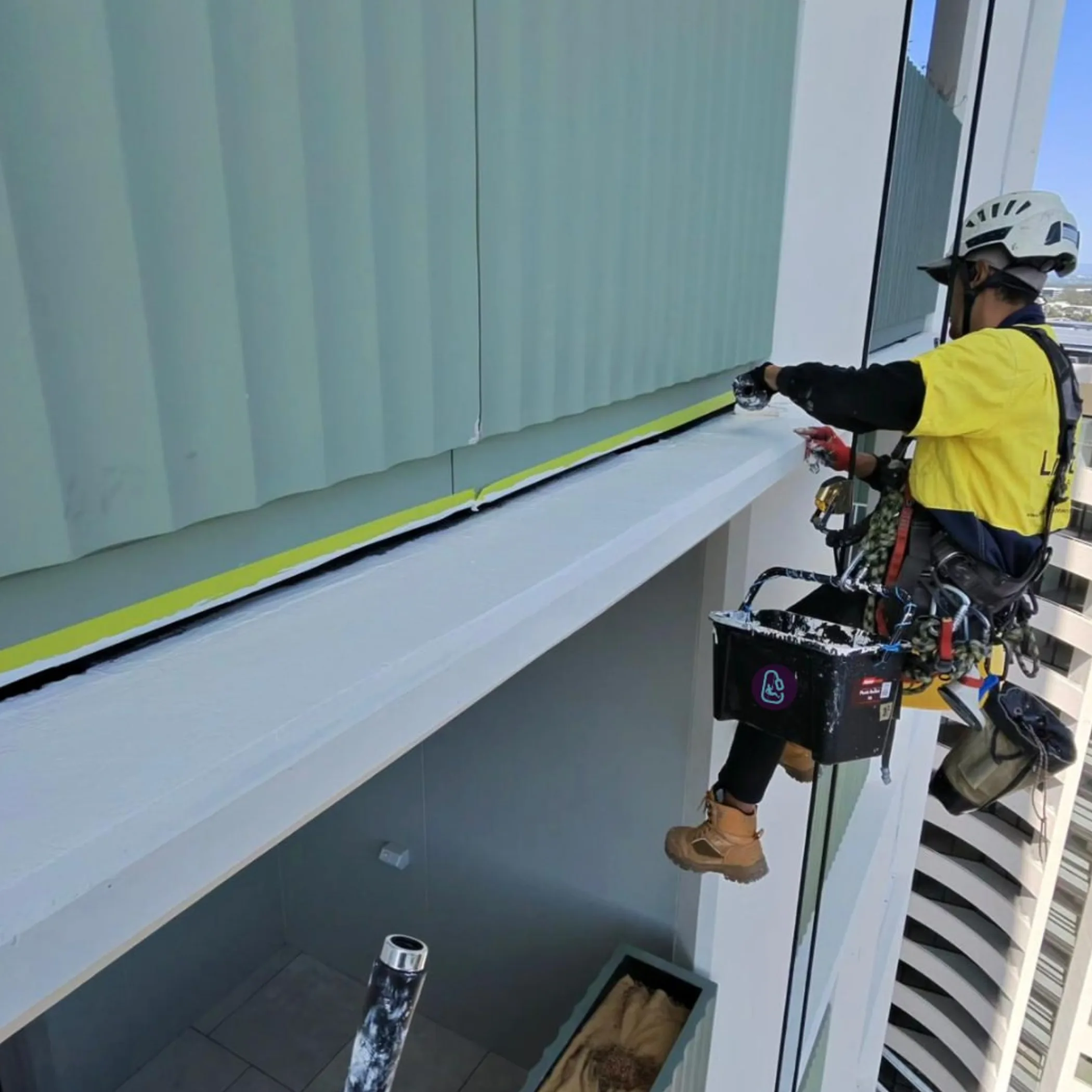
One must appreciate the hazards wind presents, direct and otherwise. It can put a worker off balance when operating a drill, scraper or pressure-washing lance, or even drive him into a ledge or away from the façade. Unsecured materials will turn to projectiles and long ropes act as a sail.
Then there is the matter of rescue. What seems a simple exercise on paper can be thwarted if the ropes, rescuer and casualty are all being moved about; timing becomes an issue. Should the rescue plan call for another worker to get to the casualty, high winds could preclude that as a safe option.
Turbulence And Wind Tunnels
In an urban environment one can encounter abrupt changes at a corner, parapet or plant room, or in the vicinity of other towers. Bridges and tanks might be open to the wind from all sides; on the coast there are gusts and salt spray not apparent from a sheltered vantage point.
Take stock of the route prior to descending. Look for where ropes might swing or be snatched up. If the worker has to put in a lot of force to hold position or make do with a second try at a tool to get it under control, the situation has likely exceeded what is safe.
Rain Is Not Just Water
It has an effect on the entire system. Friction is diminished by wet gloves, and water on metal, tile, glass, concrete or paint will change how one moves. Reading labels, radio controls and inspection points is made hard by the rain.
Exercise due care with electrical tools and any temporary power. Do not resort to plastic bags and hope to circumvent the risk of water ingress or damaged leads; adhere to the equipment and site electrical protocols.
Re-examine Anchors And Surfaces
The pre-start may have missed some things that the rain brings to light: blocked drains, leaking sealants, cladding that is loose or ponding water. Even when the weather appears to have let up, water can still come down from above onto the worker.
Make a fresh inspection after any break. Ropes, harnesses, connectors, edge protection, the anchors, the tools and comms should all be checked. Drying out is no guarantee the equipment is serviceable. For anything found to be in poor order or contaminated, put it aside and follow the manufacturer’s instructions.
Adapt To Australian Weather
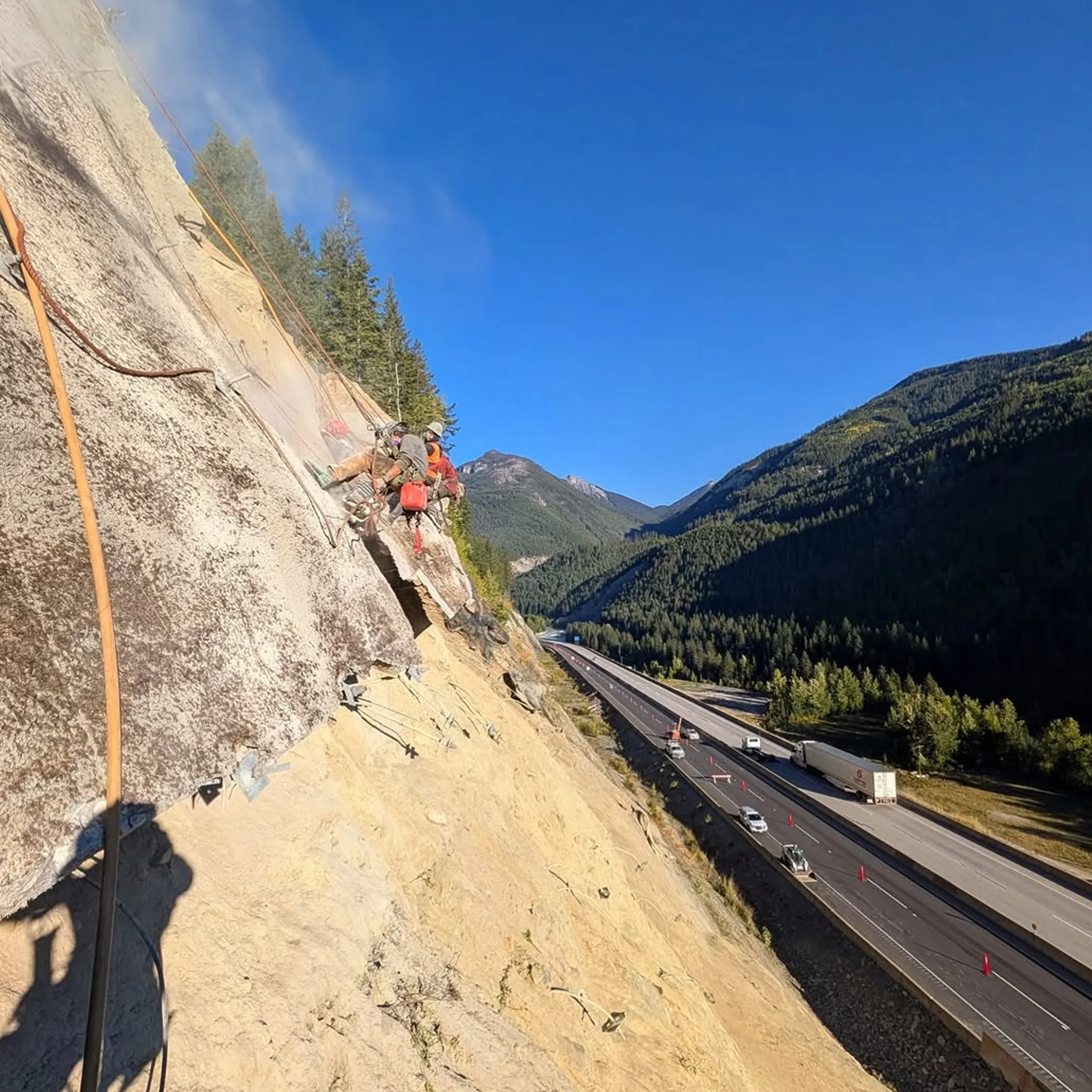
Conditions in Australia are not uniform. The Top End and WA’s north are subject to their wet and dry seasons, the south to cold fronts and strong winds off the coast. There are temperature extremes in the Red Centre between morning and afternoon, and the Pilbara will have its heat, dust and gusts.
Cyclones are a consideration in the north in the warmer months; a site might be fine but access roads are not and the warnings are changing. Further south you can have your work interrupted by thunderstorms or smoke from bushfires and frontal systems.
Do Not Rely On The Forecast
See what the forecast, radar and lightning data say before mobilising, but while working, watch the sky and the workface. A forecast is for planning, it does not give leave to go ahead if things have turned for the worse.
Factor in the time for a proper withdrawal. If a team has pushed to the limit of what the weather will bear they will not have the luxury of packing up and making good their exit once it is too late. The way back should be in the plan from the outset, not something to think about after everyone is soaked.
A Pre-Start Checklist Of Substance
This puts the weather decision in plain sight and avoids the error of ceding it to the one already in the air.
- Put to rest who has the authority to halt work and what the approved limits are.
- Look at the radar, the current state of play and any warnings.
- Where you can, get a measure of the wind at the exposed position.
- Go over the anchors, edges, ropes, harnesses and so on.
- Be sure on the rescue route and how communications are handled.
- Determine what will necessitate a withdrawal and set a time to review.
Put the decision on paper. Make a note of who gave the go ahead for the work and the time, as well as the conditions and controls in place. Should those conditions alter, the record is to be updated. There is no virtue in good paperwork for its own sake, it will not save anyone; but then again, substandard records are usually an indication that proper thought was not given to the matter.
What People Are Prone To Do Wrong
There is a prevailing notion in Australia that you can put one wind number to every rope access job. You cannot. What might be acceptable for a particular contractor’s way of doing things or a certain make of equipment is not necessarily so for another system or locale.
Then there is the error of regarding rain as a question of comfort. A worker might put up with being wet, but what matters is if he can see, hold his grip, use tools, talk to others and effect a rescue. If not, the work should not go on.
Tools and materials have an impact too and this is underappreciated. One can be steady enough in a harness until he has to put his hands to a large panel, a drill or a pressure-washing lance and control is lost. The weather limit has to be set for the task at hand, not some empty-handed exercise.
Selecting Your Work Window
Do not assume the safest window is the warmest or driest. It is when the team can finish off, pack down and put in a rescue if need be without the conditions getting away from them. An early start may keep you clear of the afternoon coastal winds or thunderstorms but you could be dealing with poor light, condensation or low visibility. In hotter climes you will find heat stress impeding concentration and judgment even if the wind and rain are fine. Put in your schedule for breaks, to hydrate and check over the gear.
When It Is Not Appropriate To Work
Rope access is not for someone short of the necessary training, medical fitness, knowledge of the equipment or ability to carry out a rescue. Nor is it appropriate where the work method, anchor system or building has not been put through its paces.
A novice would be ill advised to take a blog in lieu of a site plan or supervised training. This is a technical pursuit calling for practical assessment, a current induction and the right kind of oversight.
Some Weather Related Queries
Is there a statutory wind-speed limit in Australia?
Not a single one that covers all rope access. It is a matter of risk assessment, the work method, the equipment and supervision.
Rain?
You can sometimes get by with a little, but do not think light rainfall is carte blanche. The team has to be sure of their anchors, grip, communication and that a rescue is possible.
Gusts as well as average?
They both figure in it. The average gives you the lay of the land, gusts will cause you to lose control in a hurry. Have the documentation spell out how these are to be measured and watched.
Will a weather app vouch for safe conditions?
No. They are useful in planning but tell you nothing of turbulence, wind tunnels or what it is like at height. Observe the workface.
And if things change?
Suspend the task if the controls are no longer valid. Record the call and withdraw by the planned route, making sure the equipment is secured. There is no point in hurrying a last move to beat a shower.
Be Conservative
As for the 2026 Australian rope access safety standards and the like, the answer is straightforward: do not look for a magic number. Document a limit for the site to begin with and put a stop to it when wind, lightning, surface or visibility gets in the way of control. It is the only way to protect the workers and those below you and is in keeping with the fact that in Australia a fine morning can be all but unrecognisable by lunchtime. Any doubt and you bring the team down, secure the system and have another look at the plan.